About this experiment
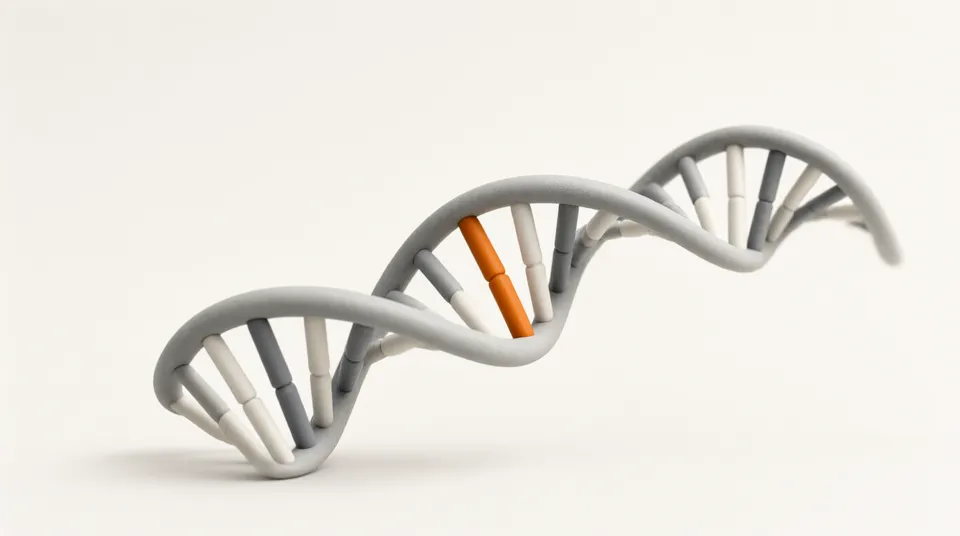
Edit a chosen DNA position and compare the exact sequence before and after the change. Alignment gaps expose insertions and deletions, while codon decoding shows which amino-acid strings change. Preset examples separate silent changes, missense substitutions, early stops and frame shifts without claiming to predict protein function.
Learning goals
- Distinguish a base substitution from an insertion or deletion.
- Connect insertion length modulo three with reading-frame preservation.
- Compare sequence-level categories while recognizing limits of codon lookup.
How to use it
- 1Apply the silent example and compare altered DNA with unchanged amino-acid lookup.
- 2Apply the missense and early-stop examples and inspect changed residues and stop position.
- 3Insert one base and compare it with an insertion of three bases.
- 4Choose a different reference position, apply an edit and record both sequences and its category.
The model
Assumptions
- The reference is a short intron-free coding sequence. All decoding uses frame one and the standard genetic code, stopping at its first in-frame stop.
- Inserted bases repeat the selected symbol. Deletion removes up to the selected number of available bases. Gaps appear only in alignment, not in the sequence used for decoding.
- A changed original ATG start is flagged separately. The decoder does not model initiation, splicing, RNA stability, protein folding, activity or organism-level effects. In-frame indels may also alter local codons or stop signals.
Try this in class
- Q1Why can a DNA change leave the decoded amino-acid string unchanged?
- Q2Why does adding three bases preserve the downstream frame even when nearby codons change?
Frequently asked questions
Is a synonymous edit guaranteed to have no biological consequence?
No. Unchanged codon-decoded amino acids do not account for regulation, processing or other sequence-dependent effects.
Does an earlier stop always mean this model predicts the real protein?
No. It describes an in-frame sequence change under the stated decoder, not actual initiation or expression.